ADHD and the Memory Problem
TL;DR: I don’t have a good memory and I never had. I’ve believed that story for a long time. I’ve managed to get into a routine where I’m actively practicing my memory. It came down to having a goal, being gentle on myself, and finding tools that work for me.
The article below is my journey through finding a method to practice my memory that works for me. The core concepts that can apply more broadly is to find something that works for you, by setting a goal, having incremental progress and getting into a routine. I also wanted instant results, which is seldom effective. Learning to quiet that part of me, slowing down, and enjoying the journey of starting at the very beginning has been very effective for me. The aim of this article and explanation, is to detail how hard, long term goals can be broken down.
My terrible memory
I feel that I’ve always had a terrible memory. That has been the case for as long as I can remember. Now that I understand how ADHD has had an impact on my life, I realise my memory, or lack thereof, comes down to attention and motivation.
It is so easy to want a quick fix, but life is never like that. To get that quick memory enhancement, I’ve tried all kinds of nootropics. However, in the end, the only thing that has actually helped is brute force! Actually, practicing remembering. I remember ginseng in particular, just gave me a headache, with limited notable benefits.
Along with my other conditions, such as prosopagnosia and aphantasia, techniques such as the memory palace aren’t effective for me. Not having a visual imagination means that any technique that requires imagining any image in my mind simply isn’t going to work. I’m not saying those techniques don’t work, they just don’t work for me.
So what does ‘brute force’ memory training look like for me?
Simply put, I can remember anything, as long as it has my full attention and I’m motivated to do it.
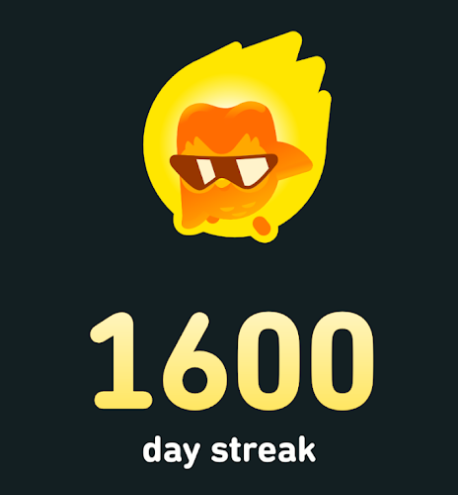
I recently hit a 1600 day streak in Duolingo. That means doing a Japanese lesson every day. When I think about my motivation however, it is more on keeping the streak alive, rather than learning. Duolingo is a wonderful app, and it is amazing that it is free, however, it does prioritise gamification. For me, it is very helpful in reading and speaking practice. Ultimately, what do I want to achieve?
My goal
For me, I want to learn a new language. Specifically, I’d love to be able to read and understand another language. Speaking is less of a priority, although it would be useful when I travel.
Why Japanese? Probably because I’m stubborn and I started it a long time ago, and I simply don’t want to give up. It is also hard, and some part of me likes hard goals.
The Japanese alphabets
Japanese writing has three alphabets: two phonetic, and thousands of characters from China known as Kanji. The basic Japanese Language Proficiency Test (JLPT) requires learning about 150 kanji, while reading common Japanese needs about 1000-1500. My general target is 1000 Kanji.
Spaced repetition and slow progress
Japanese students use spaced repetition—learning a steady stream of new words, then revising them at regular intervals. This is a highly effective method, but initially, my progress was painfully slow. I tried writing them, and even switched to pen and paper, hoping it would engage more of my brain. Sadly, I found it just didn’t work for me.
The right tool for the job
I tried a number of paid apps:
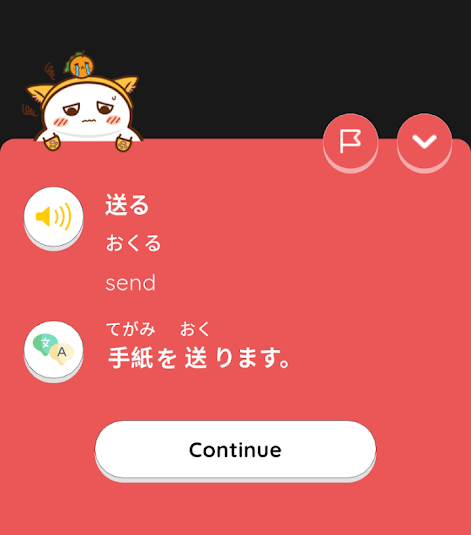
- MochiKanji: Seemed excellent, but it is a bit too cutesy for me. I don’t like the mascot looking sad when I get something wrong. This may be an aspect of Rejection Sensitive Dysphoria; I’d rather just get it wrong and learn from it. There is also a lot of animation and I value speed.
- Kanji Study: Straightforward, but I found it more like a dictionary than a study tool.
- Bunpo: Excellent for grammar, I will come back to this once I can read well enough.
- WaniKani (The Winner): This clicked because of its use of mnemonics. For example, the Kanji for 'right' (右) uses the story of 'youths' (ゆう) looking from the right side because they think differently. Most Kanji have different readings (ゆう, う, みぎ), which is a lot to remember—but I like the complexity.
WaniKani also teaches radicals (simpler shapes that form Kanji) first. This helps me feel competent and prevents confusion between similar characters.
Routine
Probably the most powerful aspect of my progress is my routine. Getting up at 5:30am, making coffee for my wife and me, putting earbuds in, and sitting outside with a stylus to practice—this is my sensory-rich ritual. I do this 7 days a week. I relish this time for myself, often combining it with some Karate to get movement in as well.
Enjoying the process
I had to learn to let go of "quick wins" and find satisfaction in the little things. Each time I ‘knew’ a kanji without needing the mnemonic, I had a little jolt of joy. That jolt is a squirt of dopamine—vital for ADHD brains to aid reinforcement. All I need to do is keep practicing.
So how does this apply to me?
Whether you're tackling language or exercise, the methodology is the same:
- Define your "Why": Be specific about the win.
- Build a Sensory Routine: Pair your goal with rituals (like my morning coffee/outside time).
- Avoid Negative Reinforcement: If a tool (like an app mascot) makes you feel shame, ditch it.
- Focus on the "Jolts of Joy": Train your brain by focusing on the small moments of progress.